

Some links in this newsletter may be affiliate links. As a member of the eBay Partner Network, I may earn a commission from qualifying purchases.
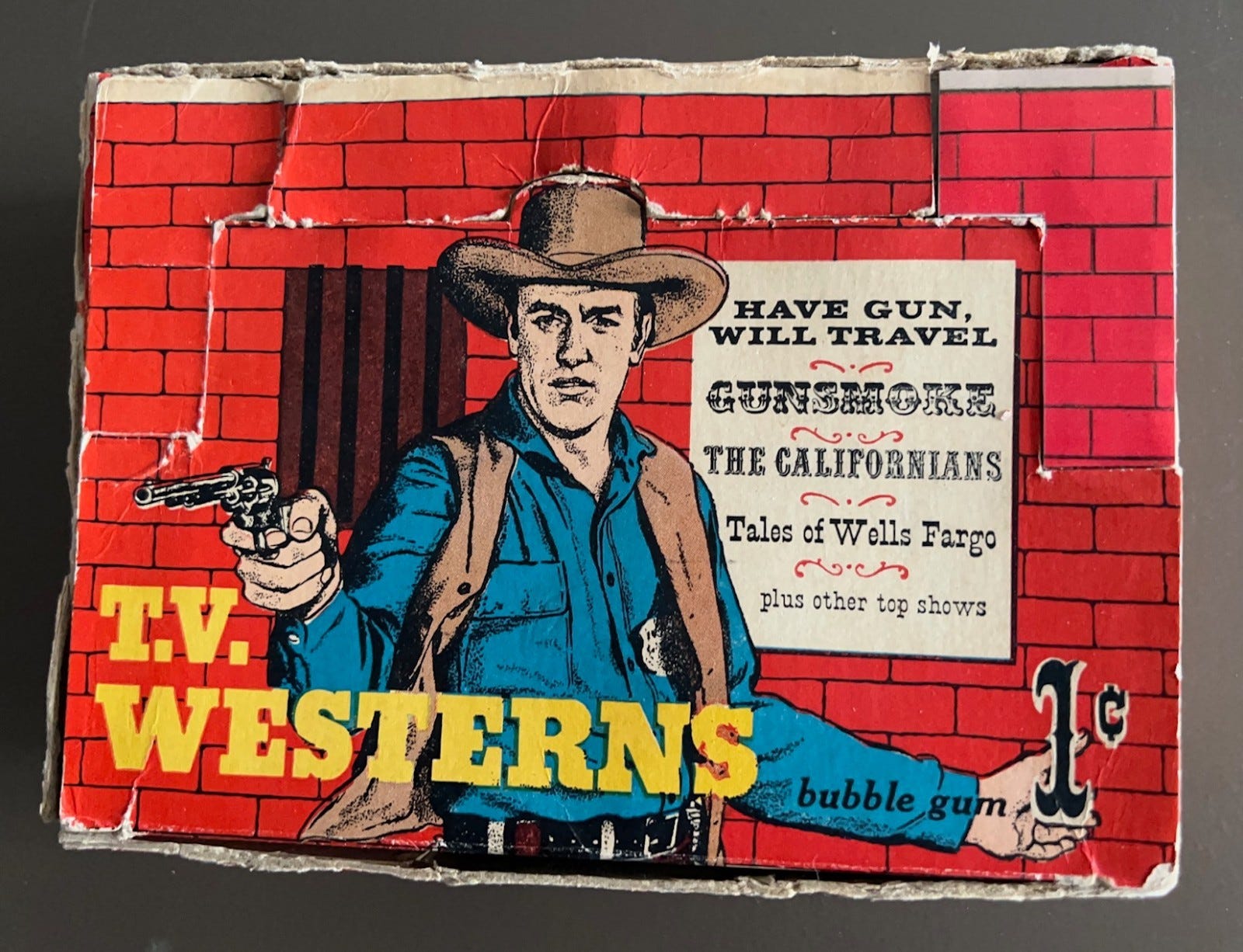
A 1958 Topps T.V. Westerns one-cent display box offered on eBay for $320 recently sent me digging through my archives.
The red brick background, enormous yellow lettering, and gunfighter practically jumping off the lid were enough to get my attention. But once I started looking through my files, I realized I had quite a bit more to share: a complete salesman sample, old auction offerings of unopened packs, a high-grade set, and some of the original artwork used to make the cards.
So this week, let’s spend a little time with the stuff surrounding Topps’ 71-card tribute to T.V. Westerns.
Another Moneymaker from TOPPS
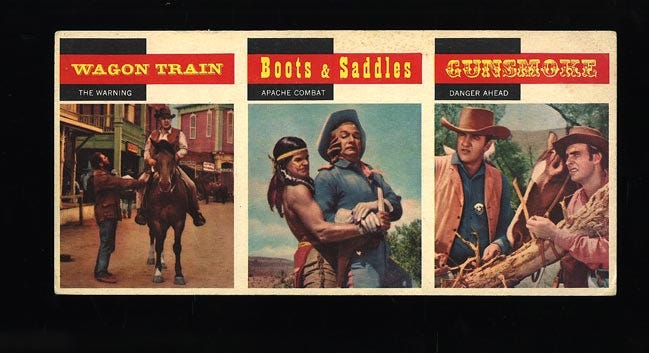
If you’ve read my other newsletter, you know I’m a sucker for salesman samples. And the T.V. Westerns example is a particularly good one.
The front has three attached cards representing three different programs: Wagon Train (“The Warning”), Boots & Saddles (“Apache Combat”), and Gunsmoke (“Danger Ahead”). Unfortunately, I can’t remember where I found this photo, so I can’t credit the source.
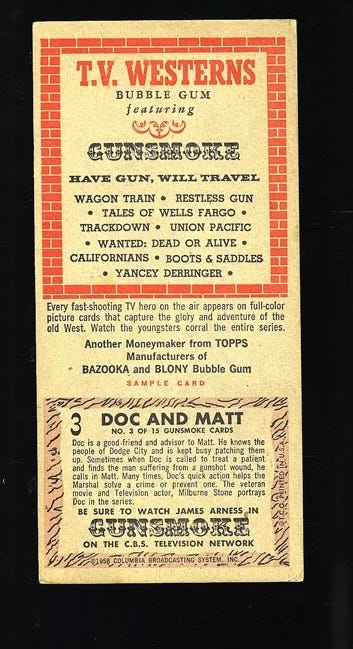
Flip it over, and you get the actual sales pitch. A red brick border surrounds a list of the television programs represented in the issue, followed by this promise:
“Every fast-shooting TV hero on the air appears on full-color picture cards that capture the glory and adventure of the old West.” Topps then tells dealers to “Watch the youngsters corral the entire series,” before delivering my favorite line: “Another Moneymaker from TOPPS.”
There’s also a “SAMPLE CARD” designation and the back of Gunsmoke card #3, “Doc and Matt.”
There’s a fun connection here to The Topps Archives’ discussion of the sample. In a November 2017 post, the author shared sample remnants but couldn’t locate an intact three-card example.
That post also raises a good question about the set’s unusual 71-card total. The author wondered whether a planned television property or individual actor’s likeness rights fell through, leaving the issue short of a more typical multiple of 11. Maverick was suggested as a conspicuous omission.
That’s an interesting possibility, although I haven’t found documentation explaining the final count. For now, it’s another question to keep in mind while digging through the issue’s history.
The Entire Set, Still Uncut
Speaking of how Topps fit this issue together, here’s another great find from my archives: four uncut T.V. Westerns sheets offered by Mastro in 2004.
The catalog described two 36-card sheets and two 30-card sheets, all fully printed on both sides. Together, their 132 card positions included all 71 different cards in the set.
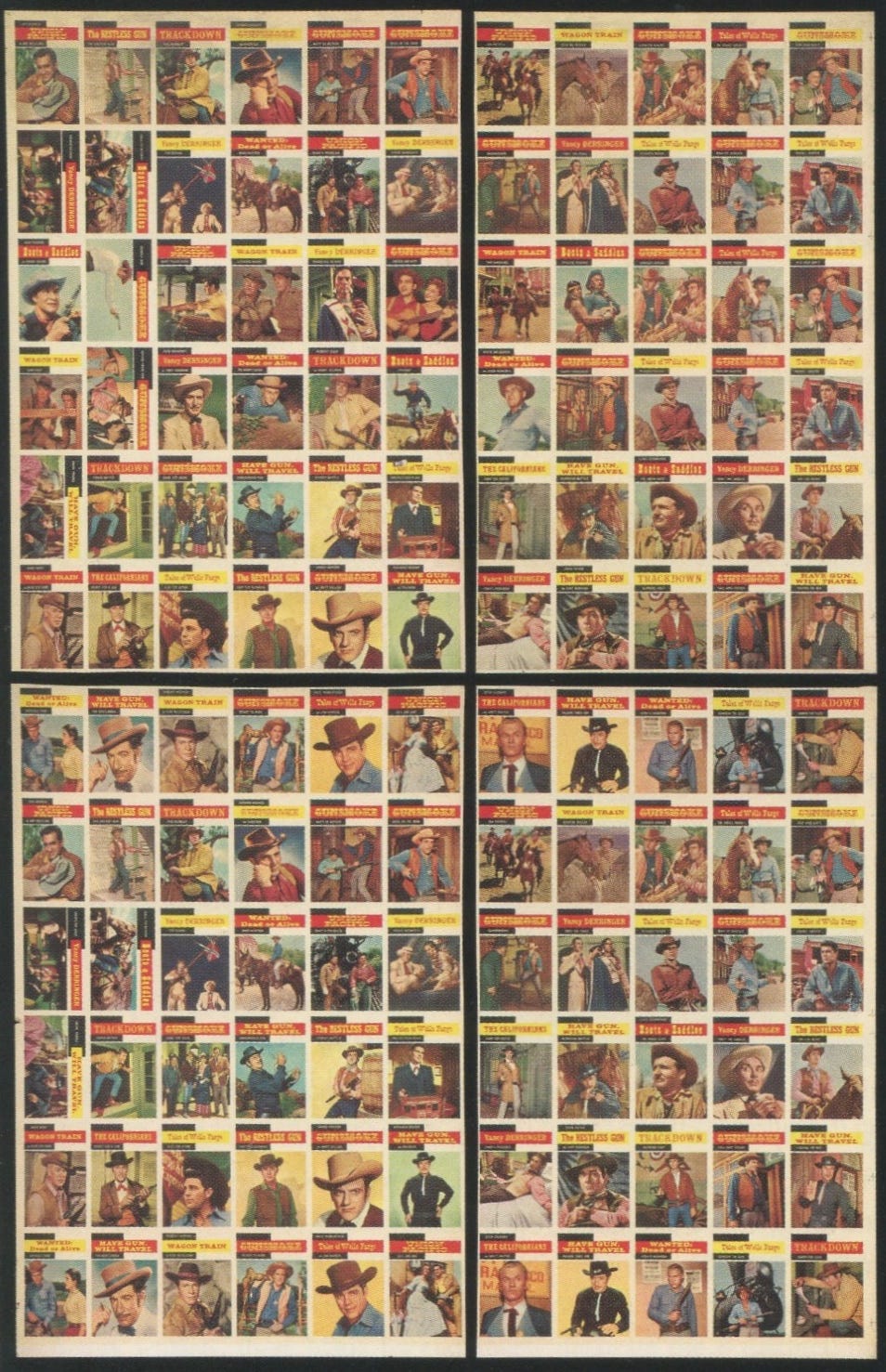
Look closely and you’ll notice repeated cards and a few horizontal designs mixed among the vertical ones. Seeing the cards together like this gives you a much different appreciation for the issue than flipping through a numbered list.
These sheets don’t explain why Topps stopped at 71 cards, but they give us surviving production material to study. And you get the entire set in one pretty incredible display.
Twenty-Eight Nickel Packs in One Auction
Here’s another incredbile lot that was offered in Mastro’s April 2005 catalog: a five-cent T.V. Westerns display box with 28 GAI-graded wax packs.
The grades ranged from GAI 7 to 9.5, including five Mint 9s and a Gem Mint 9.5.
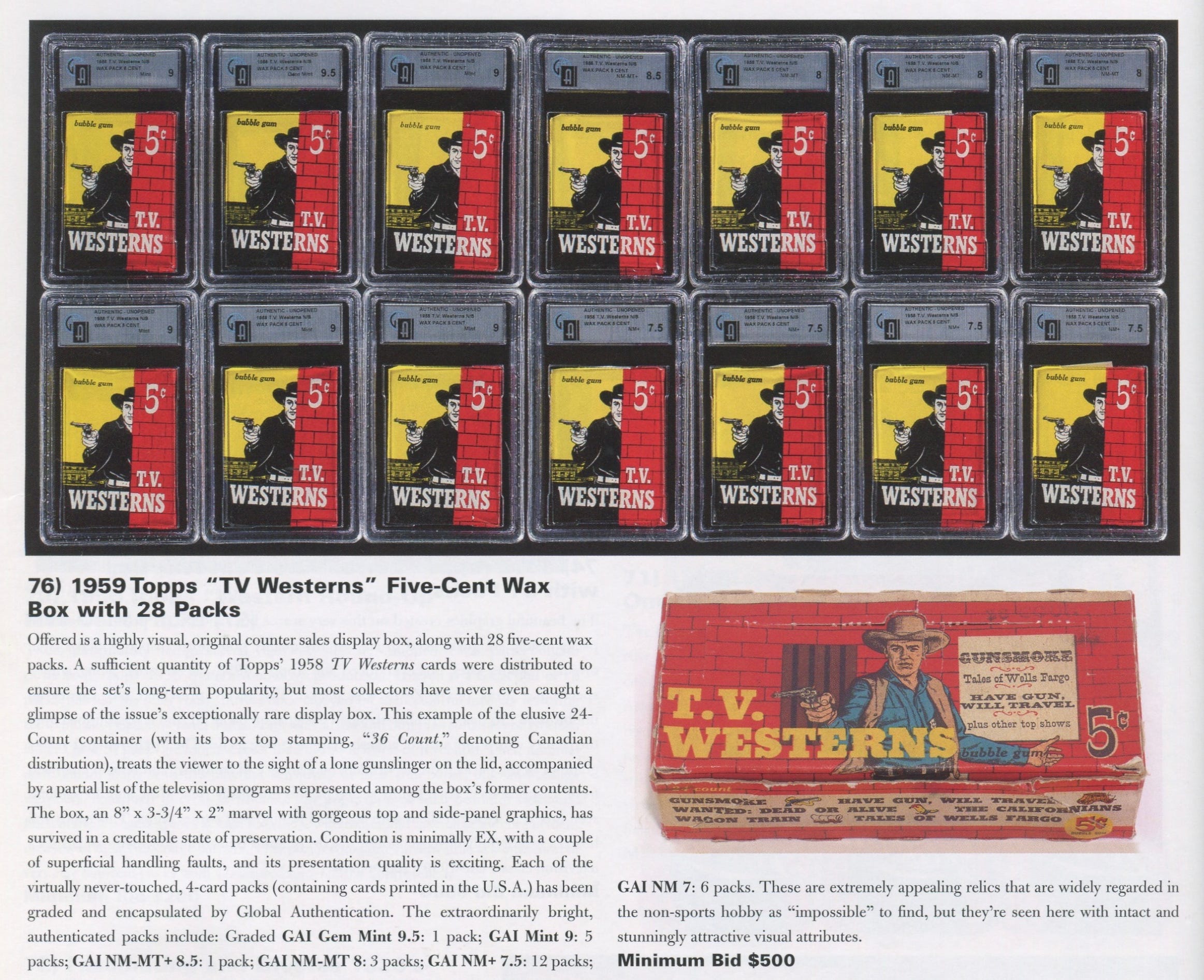
For perspective, when I checked PSA’s wax-pack population report, it listed just seven five-cent packs and ten one-cent packs. So, this one auction offering had more nickel packs than PSA’s entire reported population of both wax formats combined today.
Of course, PSA’s population isn’t a census of surviving packs. This catalog page is a pretty convincing reminder that material can be raw, in another company’s holders, or tucked away in a collection for decades. I’d love to know where those 28 packs ended up.
Mastro described the box as a 24-count container with a “36 Count” stamp on top, which the catalog attributed to Canadian distribution. It also described the packs as containing four cards printed in the United States.
Clear Wrappers, More Questions
Mastro also offered a group of ten raw cello packs in April 2005. Eight are pictured in this image, including examples showing James Arness, Dale Robertson, and cards from Yancy Derringer, The Restless Gun, and Wanted: Dead or Alive.
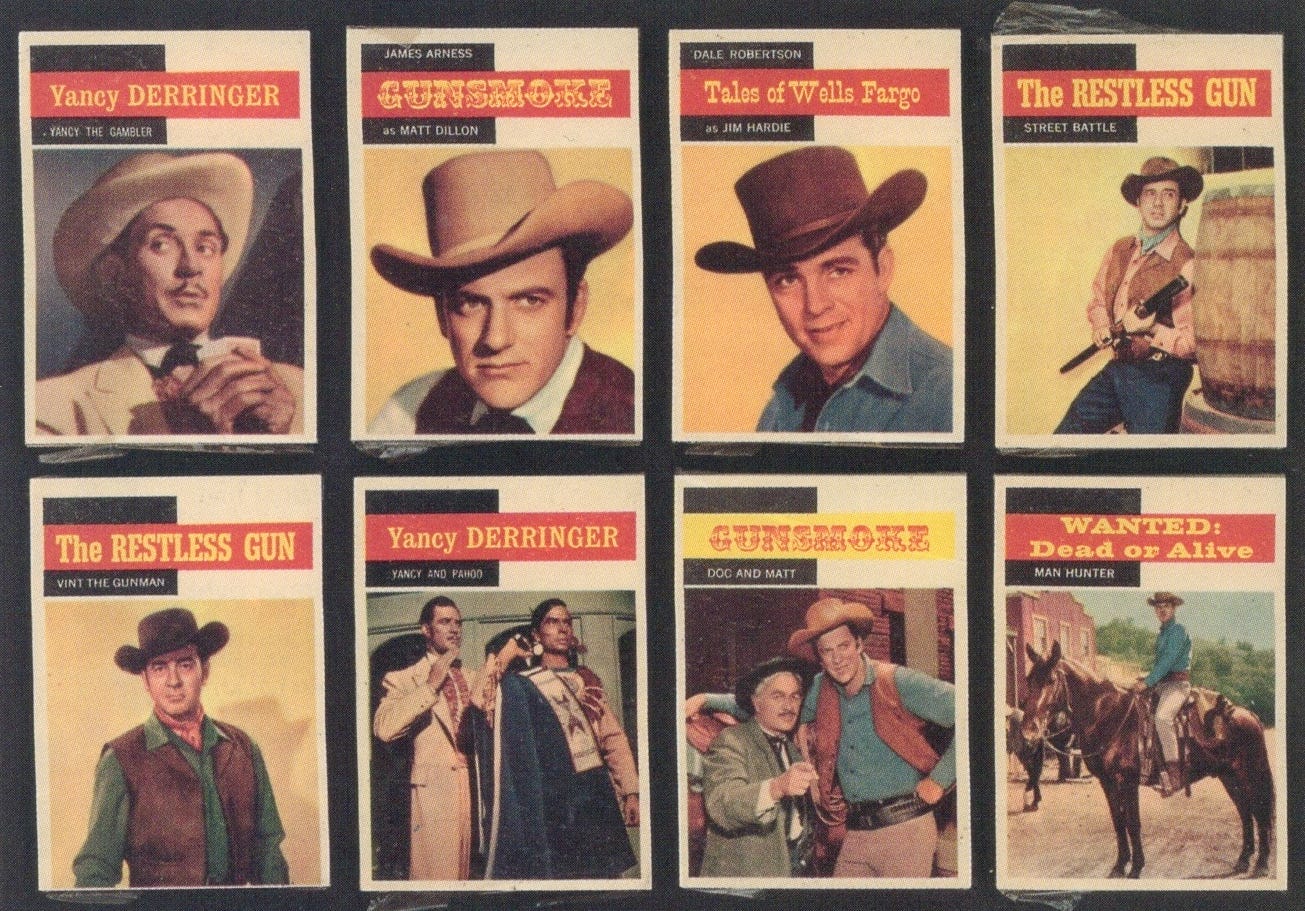
The cellos give you a very different presentation from the wax packs. They also have a larger PSA population: 75 cello packs at my latest check.
If you’d like to see a slabbed example, here’s a PSA 6 cello pack listed on eBay. And for another piece of the packaging puzzle, REA’s archives include a cello display box offered in January 2024.

A Penny Wrapper for $144.39
You don’t need an unopened pack to appreciate the packaging, either. This one-cent wrapper sold on eBay on April 23, 2026, for $144.39 after 24 bids (there’s another on eBay now, too)
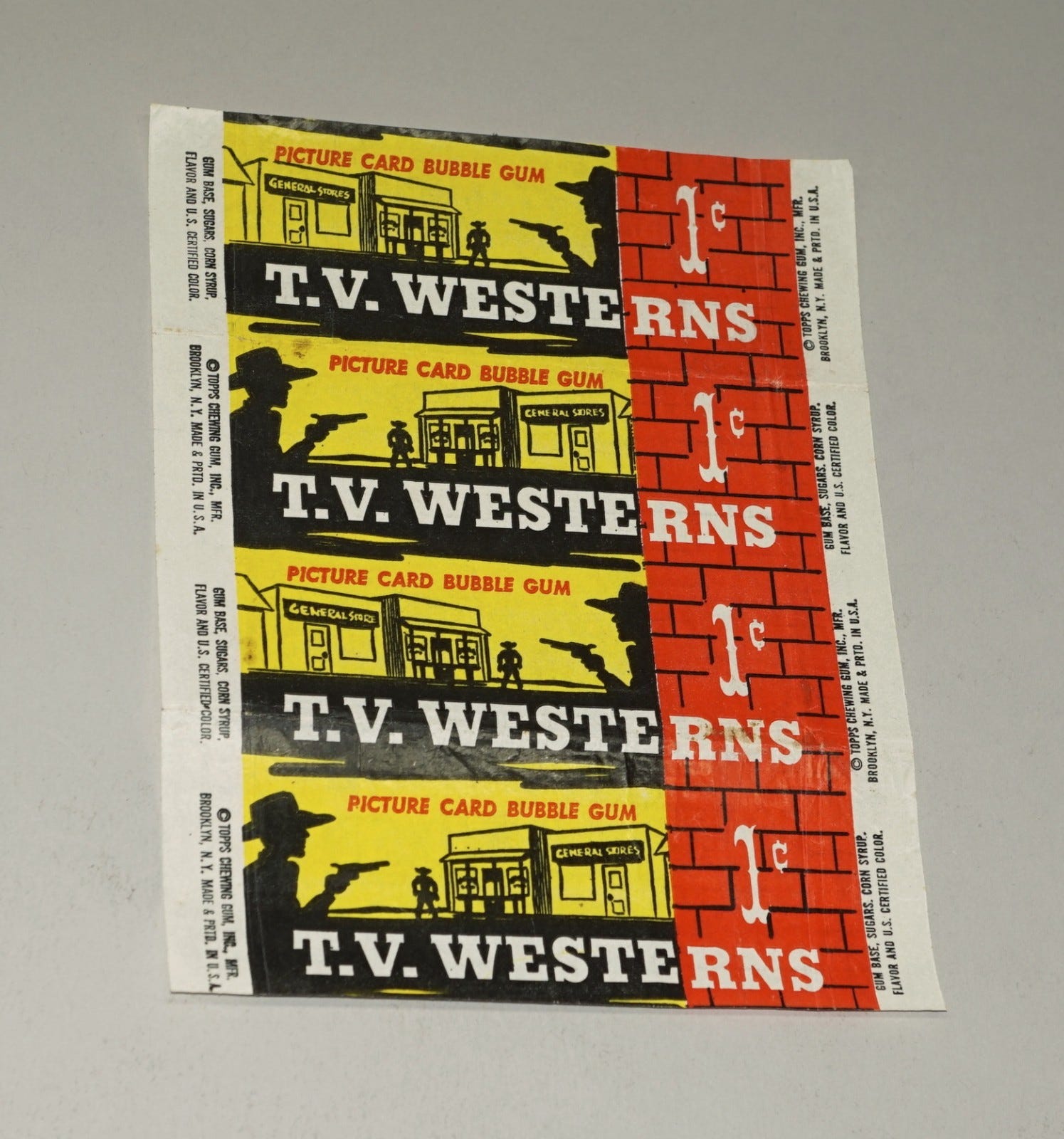
Unfolded, it shows four repeats of the design, with alternating gunfighter silhouettes, a general store, and that same red brick treatment.
It’s a great companion to the display box that started this whole search.
The Cards Look Pretty Good, Too
With all this attention to packaging, I should probably show some cards.
In December 2006, a complete PSA-graded set appeared at auction with a reported 8.06 GPA. At the time, it ranked third on PSA’s “Current Finest” list and fifth on its “All-Time Finest” list.
The breakdown was six PSA 9s, 63 PSA 8s, and two PSA 7s. The Mint 9s included Robert Culp’s #16 card and Richard Boone as Paladin on #26.
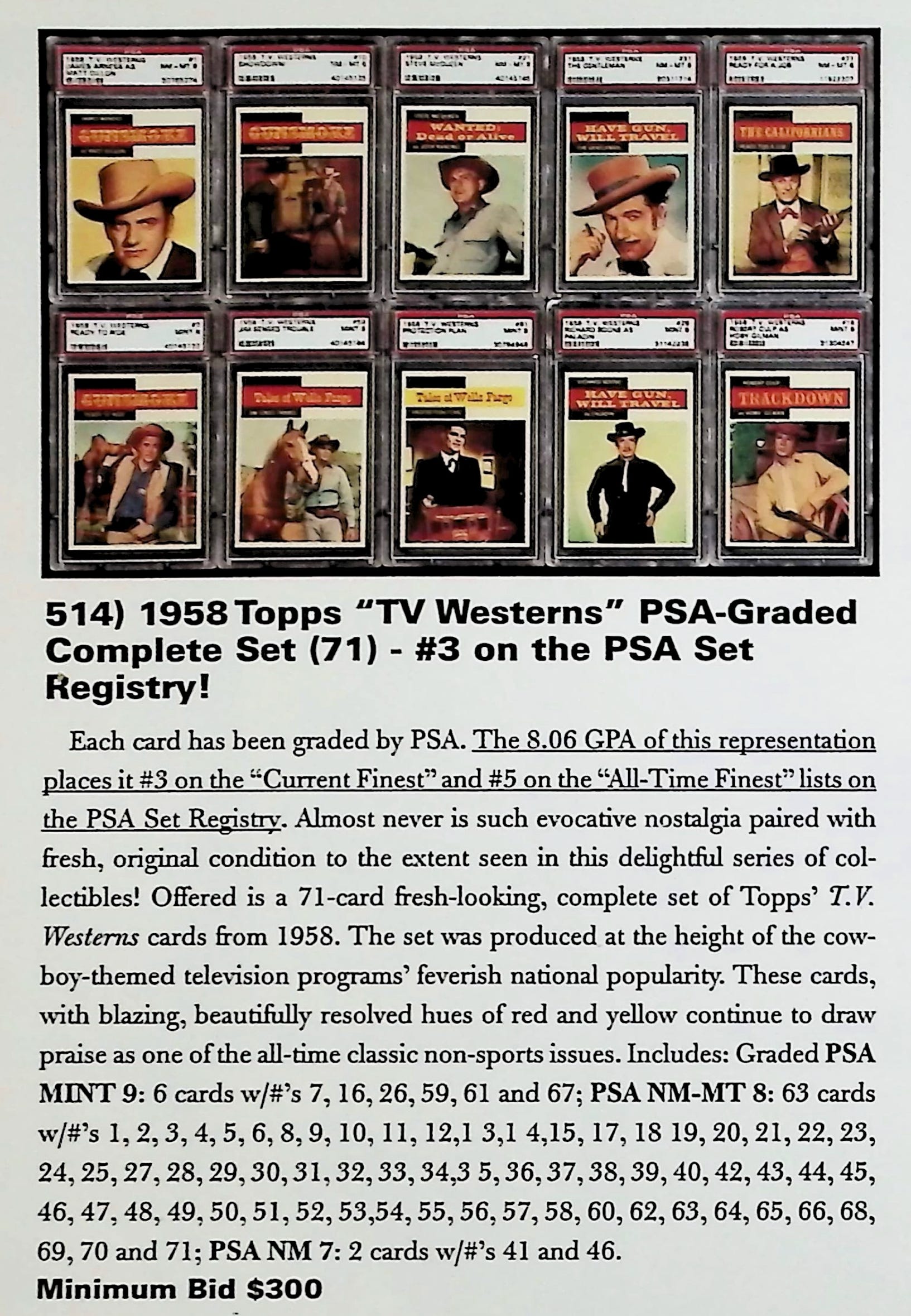
The catalog pictured ten cards, giving us a nice look at the different shows and personalities Topps brought together. I don’t have the final sale price, but the page is a useful snapshot of what a top Registry set looked like almost 20 years ago.
The Artwork Behind the Photographs
Some of my favorite related pieces are the original production images.
Mastro’s April 2007 auction included three examples it described as “polychrome” artwork, used for #16 Robert Culp, #56 “Street Battle,” and #64 from Boots & Saddles.
The catalog explained that Topps would color black-and-white publicity photographs or retouch color photographs using inks, brushes, and airbrush work, then photograph the finished image for reproduction.
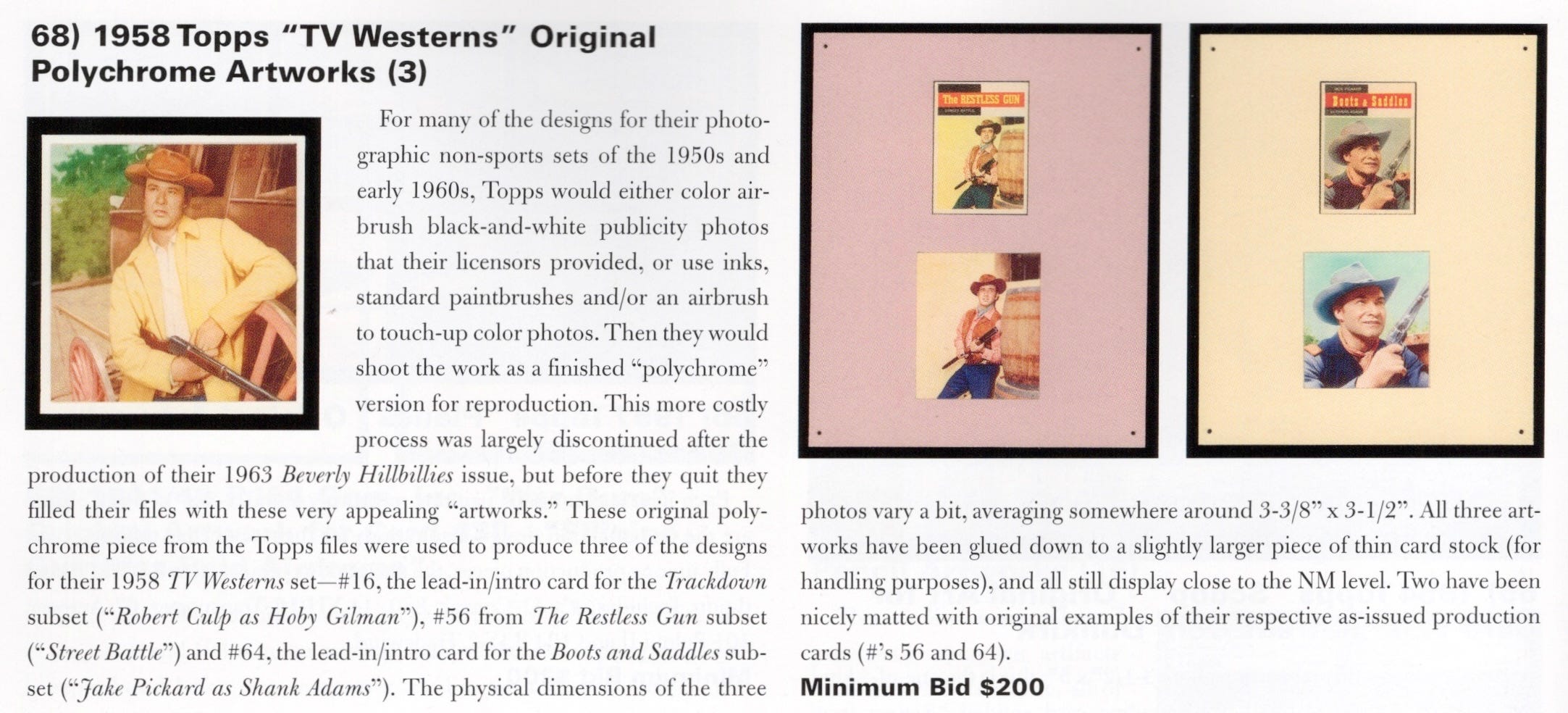
Look at the two pieces displayed with their finished cards. You can see how the larger image became part of the familiar card design, with the television title and caption added above it.
More examples appeared in an October 2007 catalog: “Chester and Kitty” and #68 “Charge!”
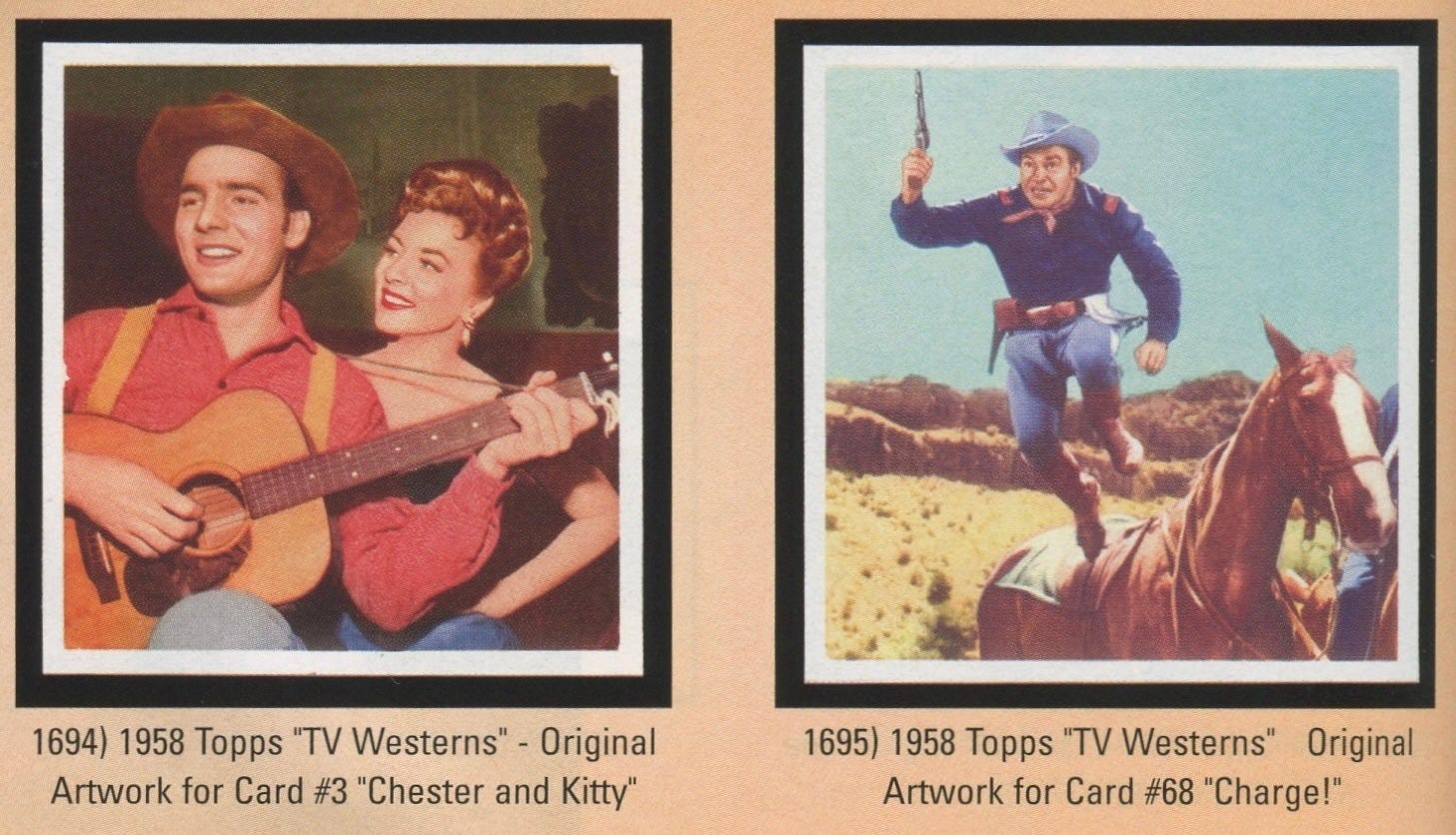
One small catalog correction: “Chester and Kitty” is identified there as card #3, but it’s actually #5 in the issued set.
These weren’t isolated offerings, either. REA offered another six-piece collection of T.V. Westerns original card artwork in Summer 2020.
There’s quite a bit to chase beyond the 71 cards: samples used to sell the product, wrappers and boxes that caught kids’ attention, unopened packs, and the production images behind the finished cards.
And to think, I just wanted to take a closer look at a one-cent display box.
Stay curious, and happy collecting!